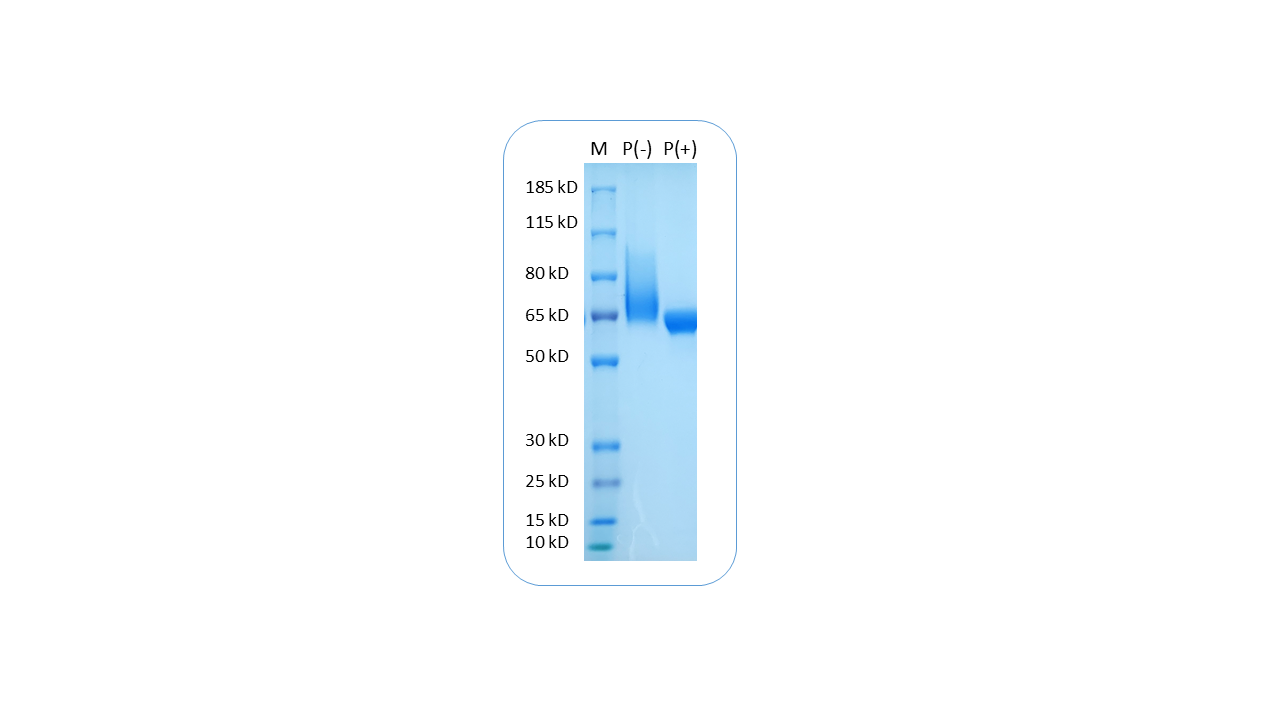
| Expression System | CHO |
|---|
| Protein Tag | C-His |
|---|
| Purity | > 95% by SDS-PAGE under reducing conditions |
|---|
| Endotoxin | < 1 EU per ug by the LAL method |
|---|
| Activity | Positive |
|---|
| Conjugate | Unconjugated |
|---|
| Species | Human |
|---|
| Accession Number | AAD13932.1 |
|---|
| Protein Sequence | Leu23-Thr529 |
|---|
| Molecular Weight | The protein has a predicted molecular weight of 60 kDa. The protein migrates at approximately 60-65 kDa on SDS-PAGE with DTT-reduced condition. |
|---|
| Formulation | 25mM Tris, 150mM NaCl, pH7.5 |
|---|
| Concentration | 25µg size is bottled at 0.2mg/mL concentration. 100 µg and 500 µg size is bottled at lot specific concentration. |
|---|
| Purification | Affinity Ni-NTA |
|---|
| Applications | ELISA |
|---|
| Format | Liquid |
|---|
| Reconstitution | NA |
|---|
| Shipping Condition | Cold Pack |
|---|
| Storage/Shelf Life | An unopened vial can be stored at 4°C for 2 weeks or at -20°C and below for six months. This stock solution should be aliquoted and stored at -70°C to minimize the freeze/thaw cycles. |
|---|
| Background Information | The HEXA protein, also known as beta-hexosaminidase subunit alpha, is an enzyme crucial for breaking down gangliosides, particularly GM2, in lysosomes within cells, according to Prospec Protein Specialists and National Institutes of Health (NIH). A deficiency in this enzyme, often caused by mutations in the HEXA gene, leads to Tay-Sachs disease, where GM2 gangliosides accumulate in nerve cells, causing neurological damage. |
|---|